



KIH VIENTIANE
NEWS AND UPDATE
Diabetic Retinopathy
1. Diabetic Retinopathy
Diabetes is caused by high blood sugar levels for a long period of time, which is caused by the pancreas not producing enough insulin or the cells of the body responding abnormally to the insulin produced by the body, so that the body cannot bring blood sugar to the cells.
2. Diabetic Retinopathy
It is a complication of diabetes that can cause vision loss or blindness caused by high blood sugar levels for a long time resulting in the blood vessels of the retinal nerve (Retina) being destroyed

3. Diabetic retinopathy stages
Depending on the severity, it is divided into two stages: first-stage diabetes or stage without new blood vessels (No proliferative Diabetic Retinopathy: NPDR) and stage diabetes with new blood vessels (Proliferative Diabetic Retinopathy: PDR)
- 3.1. NONPROLIFERATIVE DIABETIC RETINOPATHY)
It is a period when the blood vessel wall is not strong, causing the blood vessel to be bulging, which may cause blood or liquid in the blood vessel to leak out into the optic nerve floor, causing the optic nerve floor to swell. During this period, there are few symptoms. If there is blockage of the blood vessels, it may cause macular ischemia, resulting in loss of vision. First-stage diabetic retinopathy (NPDR) is divided according to severity. There are 3 levels: mild, moderate, and severe.

- 3.2. DIABETIC RETINOPATHY
It is a period when the blood vessels become blocked, causing less blood flow to feed the optic nerve and causing the optic nerve to lack blood, resulting in the creation of new blood vessels to replace it, but this new blood vessel has a weak wall, which makes it easy to break, causing bleeding in the aqueous humor and swelling of the optic nerve, which causes retinal detachment.
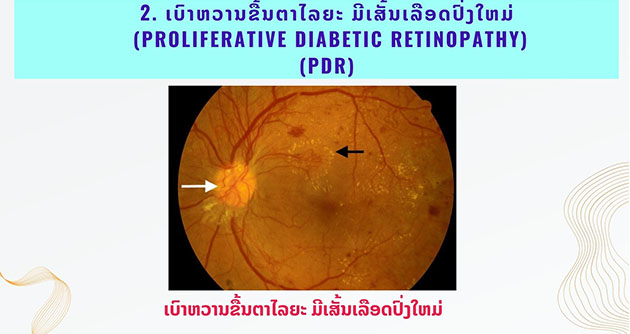
If this new blood vessel occurs in the anterior chamber angle of the eye, it will increase the eye pressure, causing damage to the optic nerve and becoming a disease of high eye pressure or glaucoma (Neovascular Glaucoma) and can cause blindness if not treated in time.

4. Diabetic retinopathy symptoms
In the first stage, there will be no Symptoms, the vision is still Normal, So the patient does not know himself and does not get an eye examination
If the diabetes is too much, there will be the following symptoms:
- See black spots or specks like spider mites floating around
- Seeing a blurry image
- Blurred eyes
- Unstable vision
- Difficulty distinguishing colors
- See a black image in some places
- In the case of intraocular pressure, the eyes will be red, painful, and blurry
In some people, there are no symptoms at all, even if the diabetes is severe

5. Diabetic Retinopathy diagnostic
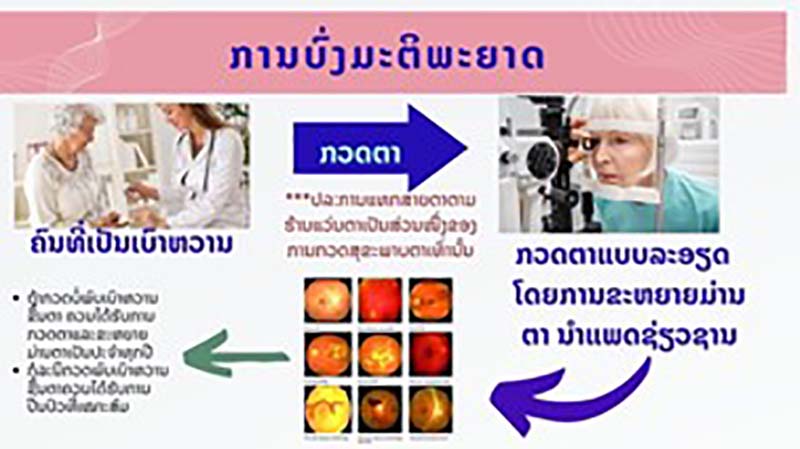
Diabetic patients should have an eye examination and dilation to screen for diabetes at least once a year until their vision is still normal.
After eye drops, the patient will have blurred vision for about 4-6 hours. You should not drive alone. You should have a relative on the day of the eye examination. If diabetes is not detected, the eye should be examined and dilated every year. If diabetes is detected, the eye should receive appropriate treatment or be examined more often, depending on the stage and severity of diabetes.
6. Diabetic Retinopathy Management
The treatment of diabetes in the first stage is the period without new blood vessels or there is no abnormal vision. It may not be necessary to receive immediate treatment. Controlling blood sugar levels and accumulated sugar levels are the most important factors in treatment, including controlling other chronic diseases such as: high blood pressure, high blood fat to help prevent the severity of the disease. More frequent blood tests will help find abnormalities faster and receive appropriate and timely treatment, help reduce the risk of disease and prevent visual loss.
Treatment of diabetes in severe phase, which is the phase with new blood vessels. During this period, the patient should be treated according to the following treatment methods :
- Shooting laser light: to control and cure the leakage of blood vessels and help the new growth of blood vessels, however, shooting laser light will not make the vision better but will help to prevent more and prevent vision from blurring more than before.
- Injection of Anti-Vascular Endothelial Growth Factor (Anti-VEGF) into the conjunctiva: to reduce the growth of blood vessels and the swelling of the eye spot to help improve vision.
- Injection of steroids (Steroids): may be an option in some patients to reduce the swelling of the eye spot will help to see better, but may have side effects to increase eye pressure.
- Vitrectomy in the case of patients with a lot of bleeding in the vitreous or those who have inflammation of the optic nerve causing swelling or tearing of the optic nerve to prevent permanent loss of vision.
7. Diabetic Retinopathy Prevention
- Control blood sugar levels, blood pressure levels and blood fat levels to be within normal limits.
- Stop smoking and drinking alcohol
- Observe changes in vision and should go for an eye examination with an ophthalmologist immediately if you find any abnormal vision such as blurred vision, black spots floating around
- Diabetic patients should see an Ophthalmologist regularly every 6 months or 1 year even if their vision is normal.